A while back, I was invited to a podcast with Sonia Jahshan and Simon Bags from the Sonia & Simon pod.
I thought our discussion was worth sharing, so without further ado, here it is:
A while back, I was invited to a podcast with Sonia Jahshan and Simon Bags from the Sonia & Simon pod.
I thought our discussion was worth sharing, so without further ado, here it is:
I was interviewed by Marilyn Mele on her summit What Reactive Dogs Really Need on the topic of play, and I thought I’d share it here on the blog!
Want subtitles? Just click the CC-button at the bottom right! Oh, and if you’re a French Speaker, Benjamin Trévisan kindly translated this discussion – find it here!
There’s an entire module devoted to the topic of play in my online course Animal Emotions, which opens for enrollment in January!
The Biological Power of Play: Play is fundamental, and can literally reconfigure and reprogram an animal’s brain.
The Science of Epigenetics: We discuss how play acts as a major modulator of gene expression.
Developing an Optimistic Mindset: We cover how play induces a strong positive emotional state that helps animals become more optimistic. An optimistic animal expects good things to happen and is more likely to be curious rather than fearful.
Building Resilience Through “Rough and Tumble”: I explain how social play teaches animals to handle slight discomfort (like being chased), learning that positive events follow such moments (like chasing the other); this helps build resilience.
Training for the Unexpected: We talk about how the unpredictable nature of play helps animals learn to deal with unexpected events without being overwhelmed.
Seven Practical Reasons to Use Play: I outline specific ways to use play as a tool for:
I was recently invited for an interview for Radio Tacoma’s series Ain’t Misbehaving with Dr Louisa Beal, a veterinarian with a special interest in behaviour.
In this discussion, we talk about:

Is your dog afraid of fireworks? How about thunder?

Keep reading, this blog post contains everything you need to know. This post is updated and all the links are double-checked about twice a year, last on December 19th, 2025 – look for the “revised” signs in the post to find the latest changes.
Is your dog not fearful of fireworks, thunder or other loud noise?
Keep reading anyway. That may change, and you should be prepared.
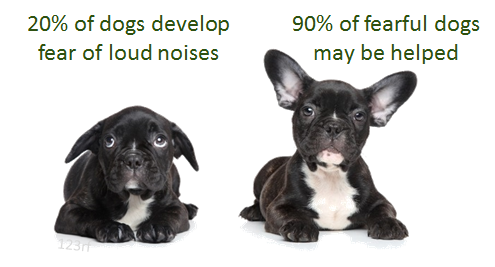
What follows below is a chapter from my full course Animal Emotions.
To be quite transparent, it’s one of the chapters that has the least practical application when it comes to caring for captive animals, but it is also, hands down, the one chapter in all my online courses that leaves students the most flabbergasted.
And given how the subject of gender identity has become politicized in the last few years, I thought that maybe sharing some very basic facts would be a way to contribute.
Many of the chapters of my Advanced Animal Training course don’t lend themselves to be published as a stand-alone blog posts, since they build on each other.
But the chapter below, discussing the Matching Law, does!
***
Matching Law implies that animals (and humans) will do more of the behaviour that leads to the most favoured outcome, but they will keep offering the other, less well reinforced behaviour too, at least sometimes. Matching is affected by reinforcer quality, rate and delay of reinforcement – and response effort.